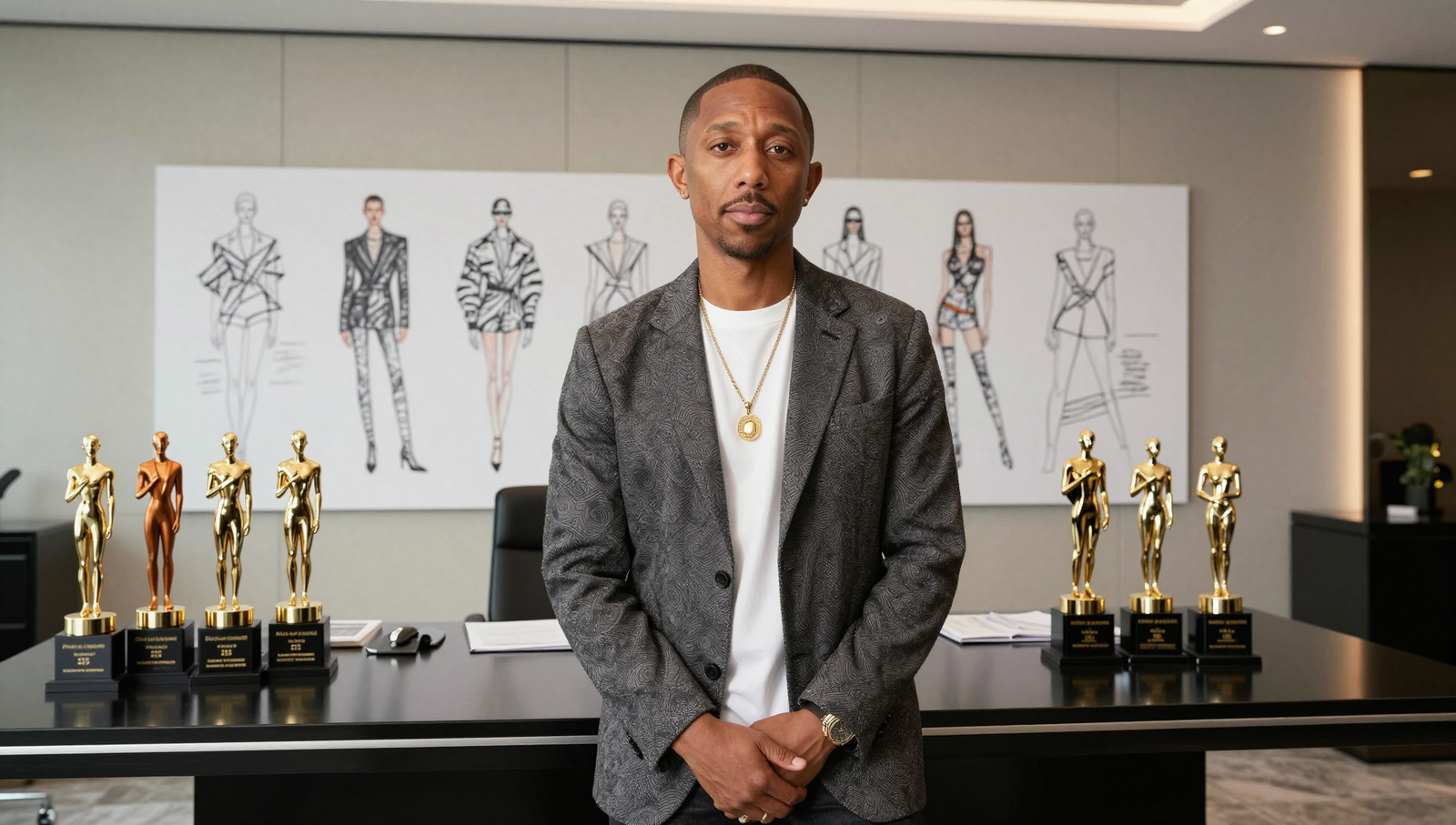
When we talk about modern music moguls who have successfully pivoted into global luxury, few names carry as much weight as Pharrell Williams. Having followed his career from the early days of The Neptunes to his current status as a titan of fashion, I’ve seen a unique financial trajectory unfold. It’s not just about the charts; it’s about the empire.
Let’s break down the financial empire of Skateboard P. As of early 2026, Pharrell Williams’ net worth is estimated to be a staggering $250 million (approximately £200 million). That’s a figure that would make even the most hardened London banker sit up and take notice. It places him comfortably in the upper echelons of celebrity wealth, proving that a career built on rhythm can translate into serious revenue.
This isn’t just a story about a man who made “Happy.” It’s a case study in diversification. From producing global number-one hits to helming the men’s division at Louis Vuitton, Pharrell has mastered the art of turning creative influence into cold, hard cash. Let’s dive into the details of how he built this massive fortune.
Early Life & Virginia Beach Roots
Every empire has its foundations, and for Pharrell, those foundations were laid in Virginia Beach, Virginia. Born Pharrell Lanscilo Williams on April 5, 1973, his background was far from the luxury penthouses he would later inhabit. His father was a handyman, and his mother was a teacher—a solid, working-class upbringing that instilled a certain resilience.
I’ve found that many music legends share a common thread: a musical spark in their youth. For Pharrell, it was the snare drum in the Princess Anne High School marching band. It was here that he honed the rhythmic sensibility that would later define pop music. But perhaps the most financially significant event of his teenage years was meeting Chad Hugo. This partnership would eventually become The Neptunes, the production engine that would generate millions.
Pharrell briefly attended Northwestern University but had the foresight to leave after two years to pursue music full-time. In the volatile world of entertainment, betting on oneself is often the first step toward financial freedom. By the time he was in his early twenties, he had already co-written “Rump Shaker” for Wreckx-N-Effect—a massive hit that introduced him to the big leagues.
The Neptunes: The Sound of a Generation
If you grew up in the UK in the late 90s or early 2000s, you couldn’t turn on MTV or BBC Radio 1 without hearing a Neptunes production. Their sound—minimalist, percussive, and undeniably catchy—was the soundtrack of the era. This dominance was the primary driver of Pharrell’s early wealth.
By 2000, the duo was unstoppable. They produced Jay-Z’s “I Just Wanna Love U,” but it was Britney Spears’ “I’m a Slave 4 U” that truly redefined pop. That track didn’t just top charts; it rebranded an artist. When you can command that level of cultural shift, the paycheques follow suit.
Let’s look at the receipts:
- Nelly’s “Hot in Herre”: A global phenomenon.
- Snoop Dogg’s “Drop It Like It’s Hot”: Cool personified.
- Gwen Stefani’s “Hollaback Girl”: The first digital download to sell a million copies.
In 2004, Pharrell bagged the Grammy for Producer of the Year and Best Pop Vocal Album for his work on Justin Timberlake’s Justified. For context, producing at this level commands top-tier royalties. A hit song is an annuity; every time “Rock Your Body” plays in a supermarket in Manchester or a club in Ibiza, the royalties flow. This catalog alone is a multi-million-pound asset.
Musical Career & The “Happy” Phenomenon
While production made him rich, his solo career and collaborations made him a global icon. I remember when “Frontin'” dropped in 2003—it was the moment Pharrell stepped out from behind the mixing desk. But the real financial windfall came a decade later.
In 2013/2014, Pharrell achieved what few artists ever do: a song that transcends entertainment to become a cultural movement. “Happy,” from the Despicable Me 2 soundtrack, was inescapable. It became one of the best-selling singles of all time.
Consider the revenue streams from a song like “Happy”:
- Single Sales: Millions of digital downloads.
- Streaming: Hundreds of millions of plays on Spotify and Apple Music.
- Sync Licensing: Featured in ads, movies, and TV shows globally.
- Album Sales: Boosting his album Girl, which topped charts worldwide.
His collaboration with Daft Punk on “Get Lucky” also added a significant sum to his bank account. These aren’t just songs; they are financial engines that run on autopilot. Even today, a decade later, these tracks generate substantial passive income.
Business Ventures & Fashion Empire
Here is where Pharrell separates himself from many of his peers. He didn’t just buy into fashion; he built it. Early on, he launched Billionaire Boys Club and Ice Cream. While many celebrity clothing lines fail, Pharrell’s succeeded because they had authentic roots in streetwear culture.
His partnership with Adidas, the “Human Race” line, was another masterstroke. It blended culture, music, and social messaging, selling out drops consistently. We can’t forget his role as Chief Brand Officer of Doodles, showing he’s also ahead of the curve on digital trends.
From a financial analyst’s perspective, Pharrell understands brand equity better than most CEOs. He doesn’t just endorse products; he integrates his identity into them. This allows him to command much higher fees than a standard celebrity endorsement. It’s the difference between renting your image and selling your vision.
Louis Vuitton & Luxury Leadership
In February 2023, the fashion world received a seismic shock: Pharrell was appointed Men’s Creative Director at Louis Vuitton, succeeding the late Virgil Abloh. This wasn’t just a job title; it was a coronation.
For a boy from Virginia Beach to lead one of the world’s most prestigious luxury houses is a testament to his influence. Financially, this role is massive. While the exact salary for a Creative Director at this level isn’t public, industry insiders know it involves a multi-million-pound base salary, significant bonuses based on sales performance, and likely equity or long-term incentives.
His debut collection at Paris Men’s Fashion Week was a spectacle, featuring Rihanna and drawing global attention. This role cements his legacy and, more importantly, secures his financial future. He is no longer just a musician dabbling in fashion; he is a fashion executive.
Real Estate & Asset Portfolio
A net worth of $250 million is usually accompanied by a tangible asset portfolio, and Pharrell’s is impressive. He has a keen eye for real estate, flipping properties for significant profit.
Key Property Moves:
- Virginia Beach: Purchased a 9,000 sq ft waterfront home in 2001 for $1.85 million. It’s his childhood dream home.
- Miami: Sold a penthouse for $8.5 million in 2007, then bought a larger triplex for $12.5 million, eventually selling it for $9.35 million in 2015.
- Los Angeles: Bought Tyler Perry’s massive 17,000 sq ft estate for $15.6 million in 2015, sold it for $14 million in 2020.
- Florida: His current primary residence is a stunning 3.5-acre waterfront estate in Coral Gables, bought for $30 million in 2020.
If we convert that Coral Gables purchase to GBP at the time, we’re looking at roughly £24 million for a single home. That’s more than the lifetime earnings of the average UK professional.
| Location | Purchase Price | Sale Price | Profit/Loss |
|---|---|---|---|
| Miami Penthouse | $12.5M | $9.35M | -$3.15M |
| LA (Tyler Perry Estate) | $15.6M | $14M | -$1.6M |
| Virginia Beach | $1.85M | N/A | Still Owned |
Note: While he took a loss on the LA and Miami flips, these properties serve as lifestyle assets and tax shelters, a common strategy among the ultra-wealthy.
The “Blurred Lines” Lawsuit & Financial Setbacks
No financial analysis is complete without looking at the liabilities. Pharrell’s biggest public financial setback was the infamous “Blurred Lines” lawsuit. The Marvin Gaye estate sued Pharrell and Robin Thicke for copyright infringement.
The original verdict was brutal: a $7.4 million judgment, later reduced to $5 million. To put that in perspective, the song earned $16.67 million in total. Pharrell’s cut was originally about $5.1 million. After the settlement, his profit from the song was essentially wiped out.
More recently, in 2026, his longtime partner Chad Hugo sued him over royalties for The Neptunes and N.E.R.D. Hugo alleged that Pharrell diverted revenues and withheld financial records. This is a messy situation that could cost Pharrell a significant sum in legal fees and settlements, potentially reaching $1 million in damages plus whatever royalties were allegedly withheld. It’s a reminder that even the best business partners can end up in court when millions are on the table.
Philanthropy & Social Impact
Wealth isn’t just about accumulation; it’s about contribution. Pharrell has been a quiet philanthropist for years. His foundation, From One Hand to Another, focuses on educational equity for underserved youth.
His most notable contribution was building a $35 million afterschool center in his hometown of Virginia Beach. Let that sink in—$35 million. For comparison, that’s more than many Premier League footballers earn in a year, dedicated entirely to community uplift.
He also offered internships to 114 Harlem high school students, with a condition: they all had to be accepted into college. It’s a “tough love” approach to philanthropy that emphasizes results over handouts. This work builds a positive public image, which in turn supports his brand value. It’s a virtuous cycle.
Financial Lessons & Future Outlook
So, what can we learn from Pharrell’s financial journey?
- Diversification is King: Music was his start, but fashion and branding are his sustenance. Never rely on one income stream.
- Own Your Brand: Pharrell didn’t just sell songs; he sold a lifestyle. That’s why Louis Vuitton came calling.
- Location Matters: He moved from Miami to LA to Florida, optimizing for tax benefits and business opportunities.
Future Outlook: With his Louis Vuitton role likely paying handsomely, a massive music catalog generating passive income, and a brand that remains culturally relevant, Pharrell Williams’ net worth is likely to climb. I wouldn’t be surprised to see him hit $300 million within the next five years.
Frequently Asked Questions
How much is Pharrell Williams worth in the UK? Pharrell Williams has a net worth of approximately $250 million. When converted to British pounds, this equates to roughly £200 million, depending on the current exchange rate. This makes him one of the wealthiest music producers in the world, with assets spanning from Virginia Beach to Paris.
Did Pharrell lose money on the “Blurred Lines” lawsuit? Yes, the lawsuit significantly impacted the profits from the song. While the track earned over 16million,PharrellandRobinThickewereorderedtopay5 million to the Marvin Gaye estate. This legal battle effectively wiped out a large portion of the earnings from one of the decade’s biggest hits.
What is Pharrell Williams’ role at Louis Vuitton? Pharrell serves as the Men’s Creative Director for Louis Vuitton, a prestigious position he assumed in February 2023. In this capacity, he oversees the design and creative direction of the men’s collections, succeeding the late Virgil Abloh and bringing his unique style to the luxury brand.
Does Pharrell still make money from music royalties? Absolutely. Pharrell continues to earn substantial royalties from his extensive catalog, including hits like “Happy,” “Get Lucky,” and his work with The Neptunes. These songs remain popular on streaming platforms and are frequently licensed for films, commercials, and television, providing a steady stream of passive income.
What businesses does Pharrell own? Pharrell is the founder of several successful ventures, including the streetwear brands Billionaire Boys Club and Ice Cream. He also heads the creative collective I am OTHER and has had a highly profitable partnership with Adidas for the “Human Race” line. His business acumen is a key component of his overall wealth.
Did Chad Hugo sue Pharrell Williams? Yes, in January 2026, Chad Hugo filed a lawsuit against Pharrell regarding their shared work as The Neptunes. The lawsuit alleges that Pharrell withheld financial records, failed to provide proper accounting, and diverted revenues. This legal dispute highlights the financial complexities that can arise from long-term creative partnerships.
Conclusion
Pharrell Williams’ net worth of $250 million is a testament to his genius, versatility, and business savvy. From the drumline of a Virginia high school to the creative director’s chair at Louis Vuitton, he has navigated the entertainment industry with rare skill. He has turned beats into business empires, lawsuits into learning experiences, and streetwear into high fashion.
As we’ve seen, his wealth is not a single stream but a complex, flowing river of royalties, salary, brand deals, and real estate. While the 2026 royalties lawsuit with Chad Hugo presents a current challenge, Pharrell’s core assets remain robust. For anyone in the UK looking to understand how to build a lasting fortune, Pharrell’s playbook is clear: innovate, diversify, and never stop creating.
Related Posts

Bryan Cranston Net Worth 2026: The $40M Fortune Behind Walter White
DJ Khaled Net Worth 2026: The $95 Million Empire Built on More Than Music
Gabriel Iglesias Net Worth 2026: How Fluffy Built a $50 Million Comedy Empire